The Human Completion of iRAPP
A worthy intention may begin within a person. It rarely reaches reality through private resolve alone.
Plans meet difficulty. Energy changes. Other responsibilities press forward. The intention that seemed clear on Sunday can be difficult to recognise by Thursday.
Peer Performance brings intention, reality, analysis and planning into relationship with people who can listen, remember, question and help us return.

The peer dimension belongs inside the method, not beside it.
The first four movements help a person think and act. The fifth brings that work into relationship.
Intention
What are we seeking to bring into reality, and why does it deserve our time?
Reality
What actually happened, apart from the outcome or explanation we hoped to give?
Analysis
What helped, what hindered and what did reality expose in our assumptions?
Planning
What should happen next, and what belongs in the next ordinary week?
Peers
Who can help us see more clearly, judge more carefully and act more faithfully?


We are never neutral observers of our own lives.
Self-reflection is necessary. It is also limited.
We may excuse what should be examined, condemn ourselves for what requires patience or enlarge an obstacle because we are afraid to continue.
Another person does not automatically see us correctly. But honest conversation gives us more than one interpretation to examine.
Keeping the promise matters. So does examining the promise itself.
Did you do what you said you would do?
This question has value. Commitments matter, and there are times when the work simply needs to be done.
Was what you said still worth doing?
Peer Performance also asks whether the plan served the intention, whether circumstances changed and what the pursuit is making of the person.
Accountability without judgment can make us more efficient at pursuing the wrong thing.
Encouragement without truth reinforces self-deception. Analysis without action becomes endless reflection. Action without analysis becomes blind persistence.
Peer Performance holds intention, judgment and action together.
Not every desire should become a goal.
Jonah’s Club does not exist to intensify every ambition.
A worthy intention is connected with a genuine good, respects legitimate responsibilities and can be placed properly within the whole of a person’s life.
Peer Performance begins with the quality and ordering of intention.
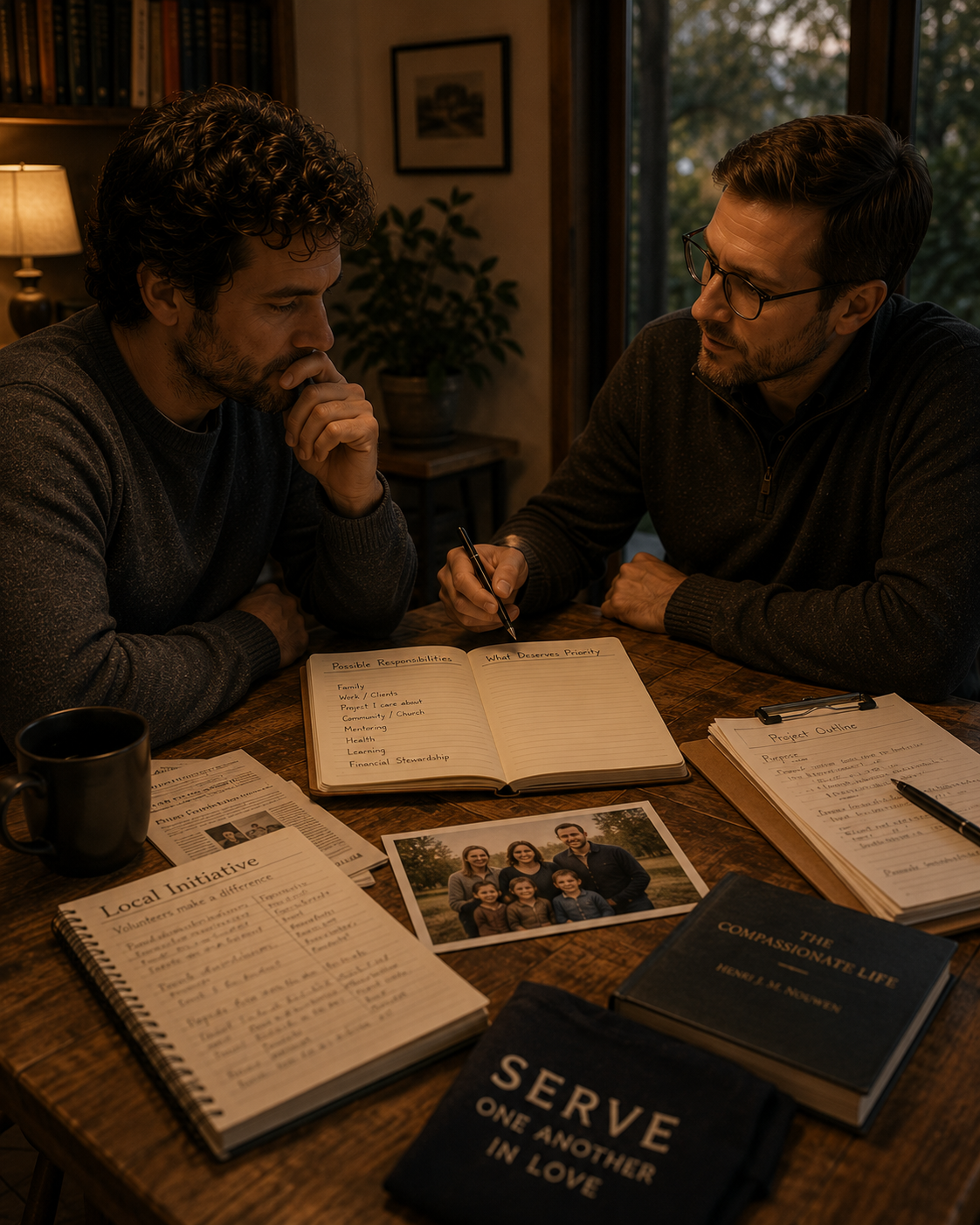

A good peer offers another perspective and returns the decision to the person.
Peer Performance strengthens agency rather than replacing it.
A peer may say:
The final responsibility remains with the member.
The work is carried through ordinary acts of attention, truth and follow-up.
Restore courage for the work still required
Recognise genuine progress, place a setback within a larger history and remind a member of capacities already demonstrated.
Name what should not remain hidden
Speak when an avoidance pattern repeats, a contradiction becomes visible or an account no longer matches reality.
Offer experience without taking over
Share judgment carefully, acknowledge limits and leave the person responsible for the decision.
Ask what happened next
Remember the commitment and return to it after the first conversation has passed.

Sometimes the member does not need a new idea.
The member needs someone to remember what was already seen clearly.
Modern life fragments attention. Something important in January may be barely visible by March. A commitment made during Annual Aims can disappear beneath the demands of an ordinary Tuesday.


A peer may recognise flight before the person inside it can name it.
Fear rarely introduces itself as fear.
It may appear as more preparation, a revised plan, another urgent responsibility or a sudden loss of interest in something that had once mattered.
Peer Performance does not accuse every hesitation of cowardice. It helps distinguish the possibilities.
There are no permanently successful people dispensing wisdom to everyone else.
Every member possesses experience. Every member also has limits and blind spots.
Bring attention and experience
Members do not participate only to access other people’s judgment. They come prepared to contribute something useful.
Remain open to being questioned
The person who is never willing to receive counsel is not yet practising Peer Performance.
Different experience does not create different human worth
A newer member may ask the question that a more experienced person has learned to avoid.
The question is not only what support can I receive, but what kind of peer will I become?
Clear boundaries protect the practice from becoming something else.
Members are not ranked against one another’s income, speed, visibility or output.
Rest, family, health, worship, recovery and relationships may be among the goods execution should serve.
Trust develops through time. Members retain responsibility for what they disclose.
Peers offer counsel. They do not take possession of another person’s life or conscience.
Peer conversation does not replace qualified medical, psychological, legal, financial or pastoral support.
The community is not a captive audience for unsolicited selling or status display.
Goodwill can include careful disagreement and direct challenge.
What is shared in confidence must not become gossip, influence or social currency.
Peer Performance depends less upon charisma than disciplined participation.
Understand before advising
Learn the intention, context and history before proposing a solution.
Clarify rather than assume
Questions help reveal what the member sees, fears and values.
Distinguish fact from interpretation
Help divide what happened from the story being told about it.
Return to the worthy intention
Bring the conversation back to the good the member originally sought to serve.
Name what is actually visible
Avoid vague encouragement and generic advice.
Leave responsibility with the member
Offer judgment without seizing the decision.
Keep confidence
Treat what has been entrusted as a responsibility.
Follow up
Remember what was discussed and ask what happened next.
A good question restores a person’s ability to judge and choose.
What are you trying to bring into reality?
- Why does it matter?
- What good is this meant to serve?
- Is the intention still worthy?
What actually happened?
- What evidence do you have?
- What are you leaving out?
- What changed after the plan was made?
What does the pattern show?
- What helped?
- What hindered?
- Where may your explanation be protecting you?
What should happen next?
- What should stop?
- What must be protected?
- What belongs in this week?
What are you avoiding?
- What do you need to remember?
- Is this a time to persist, adapt, rest or stop?
- Who needs to hear from you?

AQMeets creates the recurring moments. Jonah’s Club provides continuity between them.
Weekly Wraps return members to the ordinary week.
Monthly Masteries create space for greater analysis and learning. Quarterly Quests widen the view. Annual Aims reconsider direction and responsibility.
Jonah’s Club carries the relationship between those gatherings.


A stranger may offer an interesting idea. A peer who knows the history may understand what the moment requires.
A large community creates breadth. Serious friendship requires greater particularity.
Smaller circles allow a limited number of members to return to one another consistently and learn the meaning behind current intentions, setbacks and decisions.
The aim is not instant intimacy. It is accumulated trust.
The word performance refers to enactment, not display.
The promise is kept. The conversation occurs. The work is completed. The plan is revised in light of truth.
Sometimes faithfulness produces visible achievement. Sometimes it appears as restraint.
The measure is not spectacle. It is alignment between worthy intention, reality and action.

We do not need more people watching us. We need people capable of truly seeing us.
The deepest purpose of Peer Performance is return.
Return to what matters. Return to reality. Return to responsibilities neglected and work that deserves another attempt.
A peer cannot make that return for us. A peer may help us recognise that it remains possible.